Quick answer: A full mouth restoration usually happens in planned stages over several months, sometimes a year or longer. First comes a detailed exam with 3D records. Then gum disease and decay are treated, a trial set of temporary teeth is tested, and final crowns, bridges, implants or veneers are placed. After that, regular maintenance visits keep everything healthy.
Maybe it started with a photo you didn’t like.
Or a crown that cracked on a Tuesday night. Or the slow realization that you chew on one side, smile with your lips closed, and haven’t really enjoyed a steak in years.
Then someone says the words “full mouth restoration,” and your mind jumps straight to a long list of worries. How long will it take? Will it hurt? Will I be walking around without teeth?
The simple answer is that a full mouth restoration is a planned series of visits that rebuilds the health, function and look of your whole smile, one stage at a time.
The more honest answer is that the experience depends on what your mouth needs. Some patients mostly need crowns on worn teeth. Others need gum treatment, a few extractions and implants. This guide walks you through each stage so nothing comes as a surprise.
What Is a Full Mouth Restoration, Exactly?
A full mouth restoration (also called full mouth reconstruction or rehabilitation) combines several treatments to rebuild most or all of the teeth in both jaws.
It is most often recommended when many teeth are missing, decayed, broken or worn down. Common causes include gum disease, accidents, long-term acid erosion and teeth grinding (Rutgers School of Dental Medicine).
It is not one procedure. It is a plan that might include gum disease treatment, fillings, root canal therapy, porcelain crowns, implants or veneers, done in a deliberate order.
You can see the treatments we combine on our full mouth restoration page. Here, we focus on what the experience actually feels like from your side of the chair.
How Long Does a Full Mouth Restoration Take?
Most full mouth restorations are spread over several appointments and can take a year or longer from start to finish (Rutgers School of Dental Medicine).
The biggest time factors are healing, not chair time. Gums need to settle after treatment. Implants need months to bond with bone before the final teeth go on.
For patients at our Huntington Beach and Fountain Valley offices, having the specialists under one roof helps keep those stages moving without the delays of being referred across Orange County.
Your timeline is given to you in writing at the planning stage, so you can plan work, travel and events around it.
What Happens at the First Visit?
The first appointment is about collecting information, not drilling.
Expect a thorough conversation about what bothers you, your medical history and your goals. Then come the records:
- Digital X-rays to check every tooth and root.
- A 3D CBCT scan when implants or bone levels are part of the question. CBCT gives a three-dimensional view of the jaw bone at relatively low radiation doses, and the data can guide surgical planning (Jacobs et al., 2018).
- Intraoral scans instead of gooey impression trays. Optical impressions reduce patient discomfort and make it easier to share your case with the dental lab (Mangano et al., 2017).
- Photos and bite records to study how your teeth meet and how your smile frames your face.
Our team uses iTero intraoral scanning, 3D CBCT imaging and AI-assisted diagnostics, all described in our new patient exam overview.
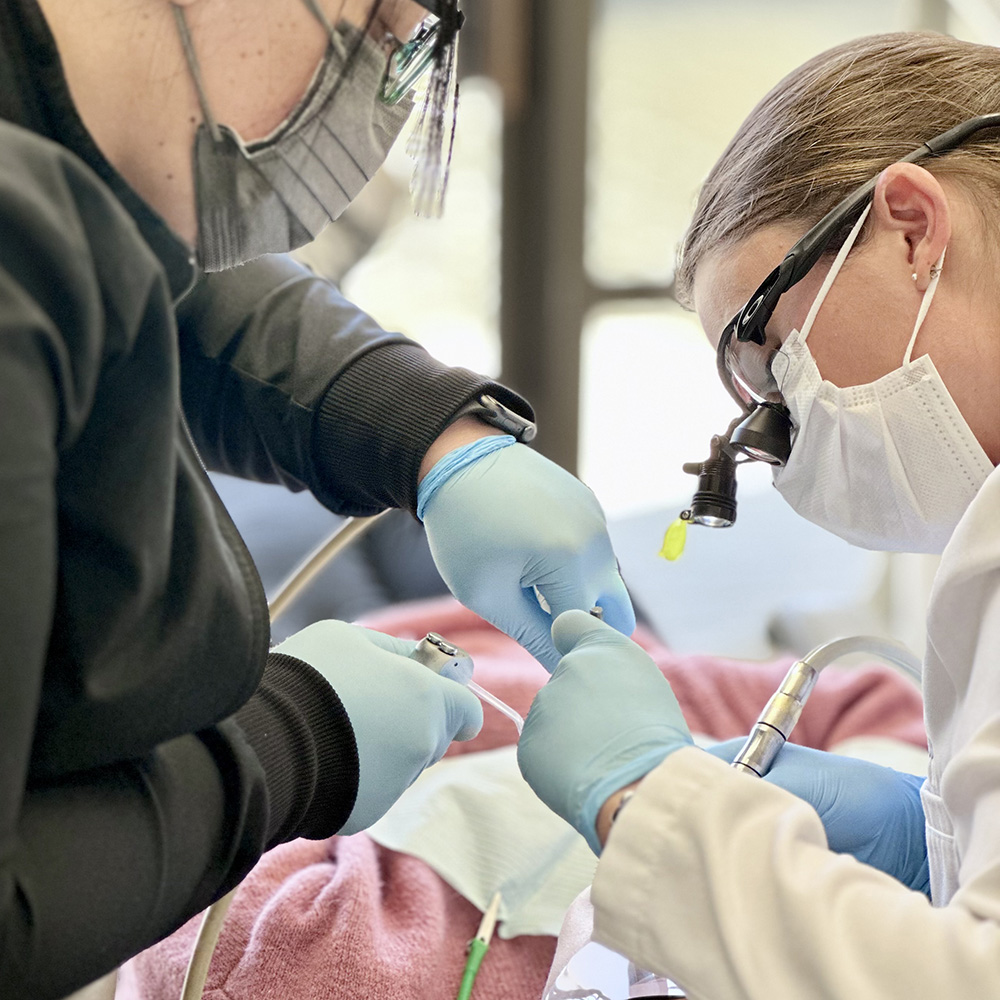
A second visit usually walks you through the plan: what will be done, in what order, what it costs and what your options are.
Step 1: Why Do You Have to Get Healthy First?
New crowns on unhealthy gums are like new flooring on a leaking foundation.
That is why the first treatment phase targets active problems: gum infection, decay, failing fillings, cracked teeth and any teeth that cannot be saved.
Gum disease is more common than most people think. About 42% of U.S. adults aged 30 and older have periodontitis, and 7.8% have the severe form (Eke et al., 2018).
This phase may include deep cleanings, fillings, root canals and extractions. It often feels like ordinary dental visits, just more of them.
Skipping this stage is the fastest way to shorten the life of everything that comes after.
Step 2: What Are Temporary Teeth For?
This is the stage most patients don’t expect, and often the one they appreciate most.
Before anything permanent is made, you wear provisional (temporary) restorations that copy the planned final shape, length and bite. You live with them, eat with them, and see them in the mirror.
If your teeth are badly worn, the plan may also restore some of the height your bite has lost. A systematic review found that permanently increasing bite height, when indicated, is a safe and predictable procedure, and the side effects reported were self-limiting (Abduo, 2012).
A European consensus on worn teeth found the evidence on whether a trial phase is strictly necessary inconclusive. It still noted that a trial phase helps manage expectations and refine the treatment order, and that fixed interim restorations may help when bite height is being raised (Ioannidis et al., 2025).
In plain terms, the temporaries are your test drive. If something feels off, it is changed now, while changes are easy.
Step 3: What Happens When the Final Teeth Go In?
Once the temporaries feel right, they become the blueprint for your final restorations.
Natural teeth that can be kept are usually covered with crowns or veneers. Large reviews show high five-year survival for modern crowns, about 94.7% for metal-ceramic and 96.6% for lithium-disilicate or leucite-reinforced glass-ceramic crowns (Sailer et al., 2015).
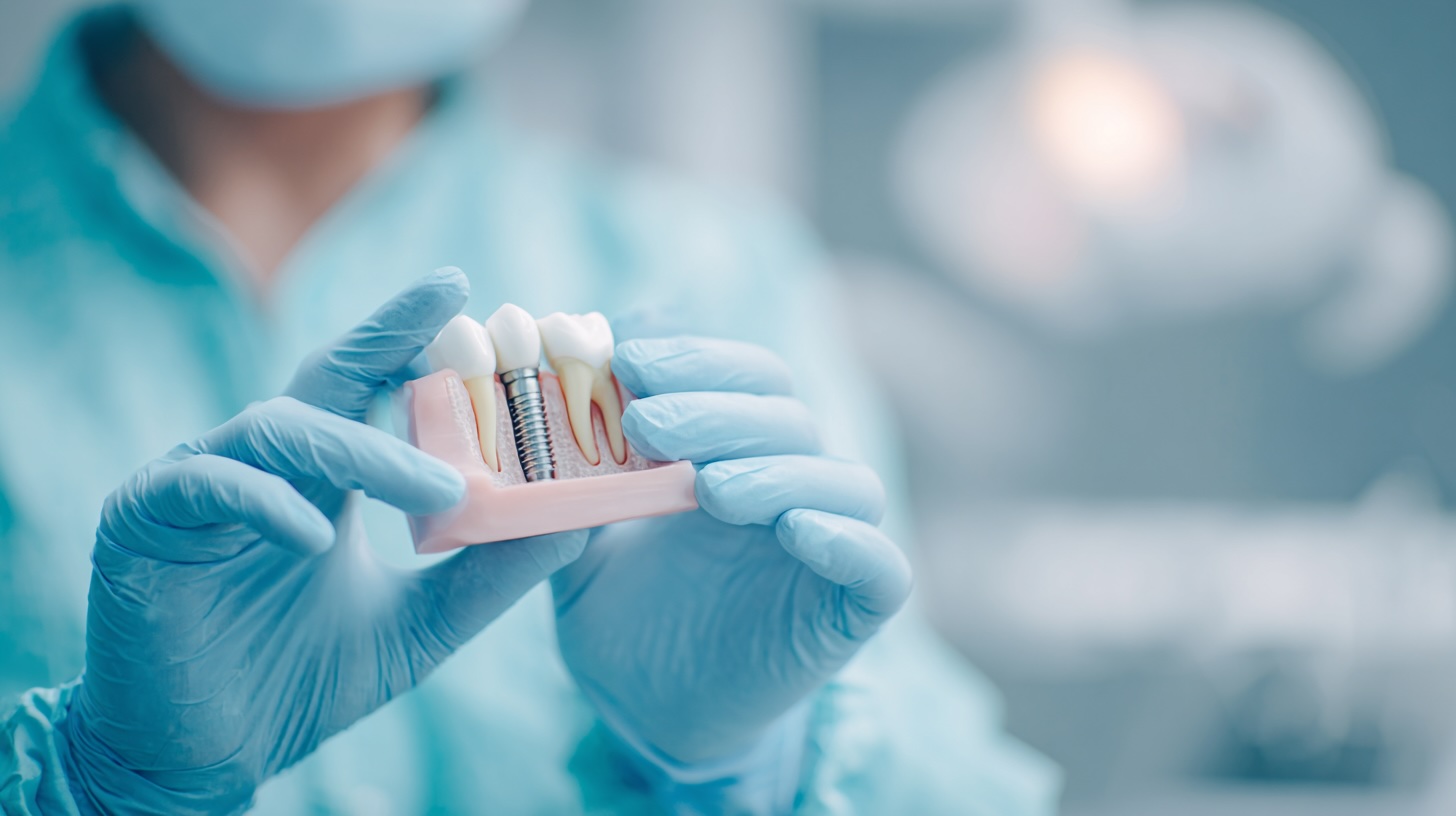
Where teeth are missing or failing, implants support the new teeth. For full-arch implant cases, most teams now use a digital workflow across the planning, surgical and prosthetic phases (Bedrossian & Bedrossian, 2025).
The final appointments are about fit and fine-tuning: checking the bite, polishing, and making sure everything feels natural when you chew and talk.
Is a Full Mouth Restoration Painful?
Most of the work is done with local anesthetic, so the appointments themselves should not hurt. Expect some soreness after longer visits, gum treatment and any surgery.
If you feel anxious, or if long appointments sound exhausting, sedation can make a big difference. We offer nitrous oxide, oral sedation and IV sedation given by a licensed dental anesthesiologist.
Our guide to sedation for smile makeovers explains what each level feels like and who it suits.
Feeling nervous is normal. It is also something we can plan around.
Will I Be Without Teeth at Any Point?
In most plans, no. Temporaries are designed so that you can leave each visit with teeth.
When implants replace a whole arch, an All-on-X approach uses 4 to 6 implants to hold a full set of fixed teeth, and in many cases a temporary bridge is attached the same day. Healing then continues for several months before the final bridge is made.
Our All-on-X guide covers that path in detail.
The Biggest Difference: Restoring Your Teeth vs. Replacing Them
“Full mouth restoration” covers two very different experiences. Which one you have depends on how many of your own teeth can be saved with a good long-term outlook.
| What to expect | Rebuilding your own teeth | Full-arch implants (All-on-X) | A combination |
|---|---|---|---|
| Best suited to | Worn, cracked or heavily filled teeth with healthy roots and gums | Most teeth in an arch missing or not worth saving | Some teeth worth keeping, others failing |
| What happens to your teeth | Kept and covered with crowns, onlays or veneers | Remaining teeth removed; implants support a fixed bridge | Strong teeth restored; weak ones replaced with implants |
| Surgery | Usually none, beyond any gum treatment | Yes, with sedation options | Limited to the implant sites |
| Temporary stage | Temporary crowns to test the bite and look | A temporary fixed bridge while implants heal | Both, depending on the area |
| Ongoing care | Cleanings, exams, protection from grinding | Cleanings around the implants and bridge checks | Both |
Neither path is “better” across the board. The right one is the one your teeth, gums, bone and goals support.
What We Look at Before Recommending a Full Mouth Restoration
A full mouth restoration is a big commitment, so we don’t recommend one lightly. Before we do, we look closely at five things.
- Gum and bone health. Can the foundation support new teeth? CBCT helps us measure bone where implants might go.
- Which teeth are worth saving. A tooth that can be kept with a good outlook usually should be.
- Your bite and grinding habits. Grinding is a common reason teeth wear down, and it can damage new work too.
- Your overall health and smoking. In one large analysis, implants failed in 6.35% of smokers versus 3.18% of non-smokers (Chrcanovic et al., 2015).
- Your goals, timeline and budget. Sometimes a smaller plan done well is the better choice.

What Are the Risks and Limits?
A well-planned restoration can last for many years, but it is not maintenance-free, and it is not a one-time fix.
Repairs happen. In a review of fixed full-arch implant bridges, only 29.3% were free of any complication after five years. Chipping of the tooth-colored material was the most common issue (Papaspyridakos et al., 2012). Most of these problems are repairable, but they take time and cost money.
The core results are still strong. For fixed implant bridges in the lower jaw, implant and bridge survival stayed above 96% after ten years (Papaspyridakos et al., 2014).
Gum inflammation around implants is common. Pooled estimates put peri-implant mucositis at 43% and peri-implantitis at 22% of patients (Derks & Tomasi, 2015). Home care and regular cleanings are your best protection.
Other limits are practical. Treatment takes time, healing can’t be rushed, and results depend on your health and habits. For implant-specific risks, see our guide to dental implant risks and complications.
How Much Does a Full Mouth Restoration Cost?
Because every plan is different, the total varies widely. At Oceanic Dental, full mouth reconstruction typically ranges from $20,000 to $60,000, and in some cases $100,000 or more.
The biggest cost drivers are the number of implants, the number of crowns or veneers, and whether gum treatment, root canals or bone grafting are needed. You receive a detailed estimate after your evaluation, before any treatment starts.
Dental insurance rarely covers a full restoration, but it may pay toward parts of it, such as extractions or crowns. Our offices accept most PPO plans, and we verify your benefits for you. See insurance and payment options.
To spread the cost, qualified patients can use CareCredit (0% interest for up to 12 months, or low-interest plans from 24 to 60 months) or LendingClub. Details are on our payment plan page.
Staging treatment can also spread the cost, as long as the order still makes clinical sense.
What Is Life Like After a Full Mouth Restoration?
For most people, the change is bigger than the teeth themselves.
In a five-year study of patients who had full mouth reconstruction for severe tooth wear, oral health-related quality of life improved after treatment and stayed stable over time. The largest gain was in psychological discomfort (van Sambeek et al., 2023).
For older patients with no teeth, a systematic review found that implant-supported prostheses improved quality of life more than conventional dentures (Linn et al., 2024).
To protect that result, plan on regular cleanings and exams. If you grind your teeth, your dentist may suggest a night guard to protect the new work.
Frequently Asked Questions
Can I keep working during a full mouth restoration?
Usually, yes. Most appointments fit around a normal work week. Plan a day or two of rest after any surgery or long sedation visit, and ask for those dates early so you can schedule around them.
Can a full mouth restoration be done in phases to spread the cost?
Often, yes. Urgent problems such as infection and decay come first. Later phases can sometimes be scheduled months apart. Your dentist will tell you which steps can safely wait and which can’t.
Do I need a full mouth restoration if only my front teeth bother me?
Not necessarily. If the back teeth are healthy and your bite is stable, a smaller cosmetic plan may be enough. A full exam shows whether front-tooth wear is a sign of a bite problem that would undo cosmetic work.
Will my new teeth look fake?
They shouldn’t. Shape, shade and length are tested with your temporaries first, and you approve the look before the final teeth are made.
What happens if a crown or bridge chips years later?
Small chips can often be polished or repaired. Larger damage may mean replacing that one piece, not the whole restoration. Regular checkups help catch problems while they are small.
Can I get a full mouth restoration if I have diabetes or take blood thinners?
Many patients can. We review your medical history and may coordinate with your physician before surgery. Well-controlled conditions are planned around, not ignored.
Final Takeaways
- A full mouth restoration is a staged plan, not a single procedure, and it can take a year or longer.
- Records come first: X-rays, 3D CBCT where needed, intraoral scans, photos and bite records.
- Gum disease and decay are treated before anything permanent is placed.
- Temporary teeth let you test the look and bite before the final work is made.
- Sedation options are available, and most plans keep you in teeth throughout.
- Complications such as chipping are common over time but usually repairable. Maintenance is part of the deal.
- Costs vary widely. Insurance may help with parts of the plan, and financing can spread the rest.
Ready to See What Your Plan Would Look Like?
The best way to know what your restoration will involve is a consultation. You will leave with your records reviewed, your options explained, and an honest estimate of time and cost.
Book a full mouth restoration consultation at our Huntington Beach or Fountain Valley office.
Research References
- Rutgers School of Dental Medicine. Full Mouth Reconstruction. https://sdm.rutgers.edu/full-mouth-reconstruction
- Jacobs R, Salmon B, Codari M, Hassan B, Bornstein MM. Cone beam computed tomography in implant dentistry: recommendations for clinical use. BMC Oral Health. 2018;18(1):88. doi:10.1186/s12903-018-0523-5. https://pubmed.ncbi.nlm.nih.gov/29764458/
- Mangano F, Gandolfi A, Luongo G, Logozzo S. Intraoral scanners in dentistry: a review of the current literature. BMC Oral Health. 2017;17(1):149. doi:10.1186/s12903-017-0442-x. https://pubmed.ncbi.nlm.nih.gov/29233132/
- Eke PI, Thornton-Evans GO, Wei L, Borgnakke WS, Dye BA, Genco RJ. Periodontitis in US adults: National Health and Nutrition Examination Survey 2009–2014. J Am Dent Assoc. 2018;149(7):576–588.e6. doi:10.1016/j.adaj.2018.04.023. https://pubmed.ncbi.nlm.nih.gov/29957185/
- Abduo J. Safety of increasing vertical dimension of occlusion: a systematic review. Quintessence Int. 2012;43(5):369–380. https://pubmed.ncbi.nlm.nih.gov/22536588/
- Ioannidis A, Pitta J, Panadero RA, et al. Rehabilitation strategies and occlusal vertical dimension considerations in the management of worn dentitions: consensus statement from SSRD, SEPES, and PROSEC conference on minimally invasive restorations. J Esthet Restor Dent. 2025;37(3):702–706. doi:10.1111/jerd.13432. https://pubmed.ncbi.nlm.nih.gov/39931975/
- Sailer I, Makarov NA, Thoma DS, Zwahlen M, Pjetursson BE. All-ceramic or metal-ceramic tooth-supported fixed dental prostheses (FDPs)? A systematic review of the survival and complication rates. Part I: Single crowns (SCs). Dent Mater. 2015;31(6):603–623. doi:10.1016/j.dental.2015.02.011. https://pubmed.ncbi.nlm.nih.gov/25842099/
- Bedrossian E, Bedrossian EA. Full mouth reconstruction with dental implants: planning, surgical, and prosthetic phase. Dent Clin North Am. 2025;69(2):257–274. doi:10.1016/j.cden.2024.11.007. https://pubmed.ncbi.nlm.nih.gov/40044289/
- Chrcanovic BR, Albrektsson T, Wennerberg A. Smoking and dental implants: a systematic review and meta-analysis. J Dent. 2015;43(5):487–498. doi:10.1016/j.jdent.2015.03.003. https://pubmed.ncbi.nlm.nih.gov/25778741/
- Papaspyridakos P, Chen CJ, Chuang SK, Weber HP, Gallucci GO. A systematic review of biologic and technical complications with fixed implant rehabilitations for edentulous patients. Int J Oral Maxillofac Implants. 2012;27(1):102–110. https://pubmed.ncbi.nlm.nih.gov/22299086/
- Papaspyridakos P, Mokti M, Chen CJ, Benic GI, Gallucci GO, Chronopoulos V. Implant and prosthodontic survival rates with implant fixed complete dental prostheses in the edentulous mandible after at least 5 years: a systematic review. Clin Implant Dent Relat Res. 2014;16(5):705–717. doi:10.1111/cid.12036. https://pubmed.ncbi.nlm.nih.gov/23311617/
- Derks J, Tomasi C. Peri-implant health and disease. A systematic review of current epidemiology. J Clin Periodontol. 2015;42(Suppl 16):S158–S171. doi:10.1111/jcpe.12334. https://pubmed.ncbi.nlm.nih.gov/25495683/
- van Sambeek RMF, de Vos R, Crins LAMJ, et al. Perception of oral health related quality of life and orofacial aesthetics following restorative treatment of tooth wear: a five-year follow-up. J Dent. 2023;136:104626. doi:10.1016/j.jdent.2023.104626. https://pubmed.ncbi.nlm.nih.gov/37473829/
- Linn TT, Khaohoen A, Thu KM, Rungsiyakull P. Oral-health-related quality of life in elderly edentulous patients with full-arch rehabilitation treatments: a systematic review. J Clin Med. 2024;13(12):3391. doi:10.3390/jcm13123391. https://pubmed.ncbi.nlm.nih.gov/38929921/