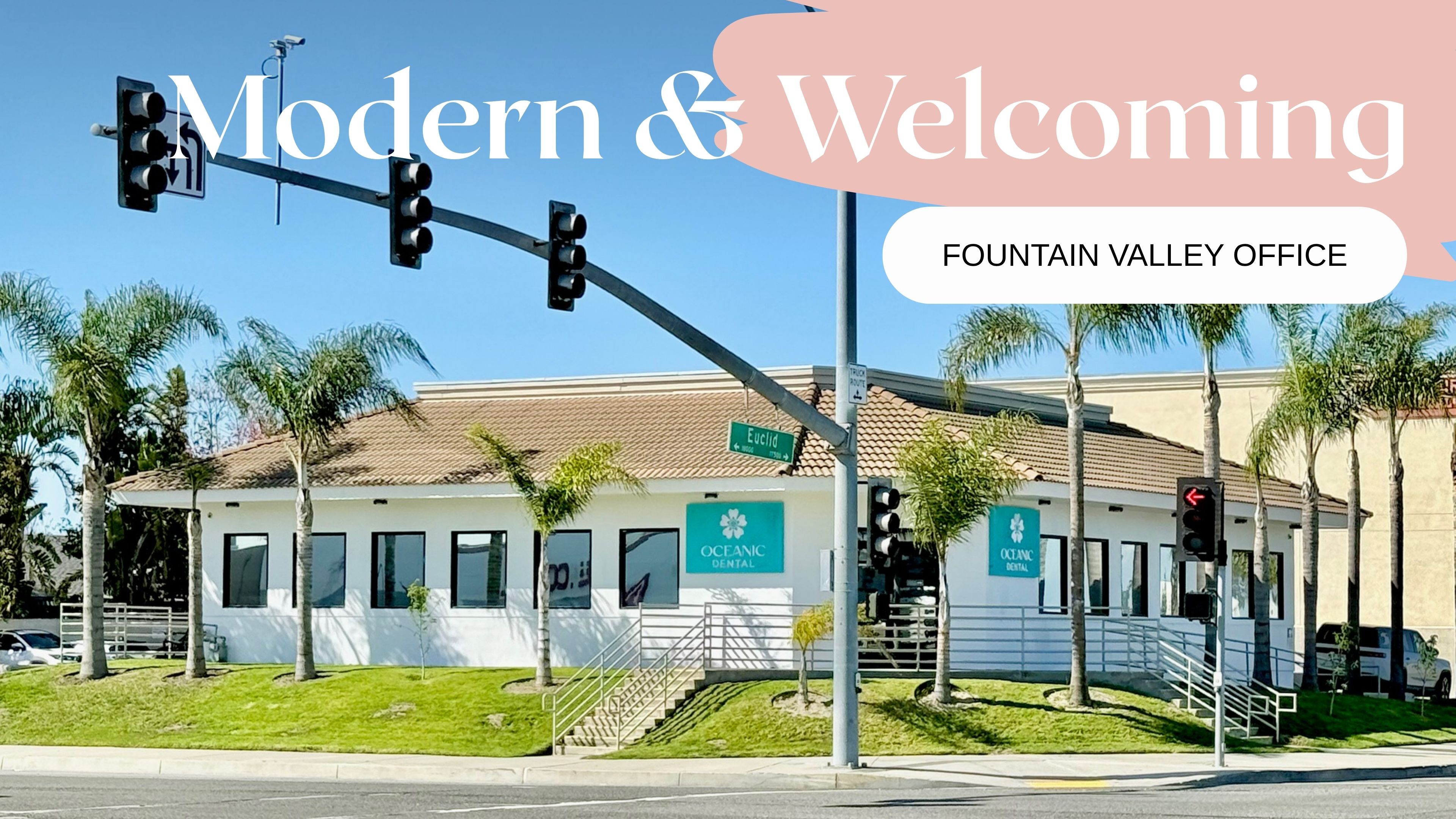
Welcome to the New Era of Dental Implants in Fountain Valley
If you’ve been thinking about fixing missing or failing teeth, 2026 is a very good year to do it—especially in Fountain Valley.
Why? Because our local implant world has leveled up.
- Smarter diagnostics with AI-assisted imaging
- More precise surgeries with 3D planning and robotic-guided systems
- Better materials, including metal-free zirconia options
- Faster timelines, like “Teeth-in-a-Day” style full-arch cases
- More transparent costs and flexible financing
In short: dental implants in Fountain Valley aren’t just “screws and crowns” anymore—they’re a blend of technology, artistry, and long-term health planning.
This guide will walk you through what you really need to know in 2026—without the jargon—and help you understand where Oceanic Dental fits into that landscape.
What Are Dental Implants (and Why Do People Love Them)?
A dental implant is like a new root for a missing tooth. It’s a small post, usually made of titanium or zirconia, placed into your jawbone. Once it heals and bonds with the bone, we connect a custom-made crown, bridge, or full arch of teeth on top.
Implants can replace:
- One missing tooth
- Several missing teeth
- A full upper or lower arch (using systems like All-on-X)
Why patients choose implants:
💪 They’re stable. No slipping like dentures.
🍎 You can chew confidently. Many people can eat almost like they did with natural teeth.
😁 They look natural. Especially with modern ceramics.
🦴 They help preserve bone. Implants stimulate the jawbone and can slow down bone loss.
⏳ They’re long-term solutions. With proper care, they can last many years, often decades.
Why Fountain Valley Is a Hotspot for Implants in 2026
Fountain Valley has quietly become a mini “implant hub” in Orange County. Patients here benefit from:
- A high concentration of trained implant providers
- Access to advanced technologies (CBCT scans, AI, digital planning, 3D printing)
- Clinics that can handle simple to very complex cases—including full mouth reconstructions
Oceanic Dental sits in the heart of this ecosystem as a multi-specialty, concierge-level center for patients who need more than a quick fix.
The Technology Behind Modern Implants (Explained Simply)
You don’t need to know all the engineering—but it is helpful to know why modern implants are safer and more predictable than ever.
1. 3D X-Rays (CBCT) + AI Diagnostics
Instead of just 2D X-rays, we use 3D scans of your jaw. In 2026, software can:
- Map out important structures (nerves, sinuses)
- Measure bone height, width, and density
- Color-code areas of stronger and softer bone
- Combine your health info (like diabetes, smoking, grinding) into a personalized risk profile
In plain English:
We don’t have to guess anymore. We plan your implants with far more information—meaning fewer surprises and better outcomes.
2. Digital Planning & Surgical Precision
Before we ever touch your jawbone, your case is planned virtually:
- We “place” your implant in the software first
- We line it up with how your future crown or full arch will look
- We make sure it’s in the safest, most aesthetic position
Some providers also use robotic or guided systems that act like guardrails during surgery, helping ensure the drill follows the planned angle and depth. At Oceanic, we emphasize restorative-driven planning—we plan backwards from your final smile, not just where the bone happens to be.
3. 3D Printing & “Teeth-in-a-Day” Style Solutions
For certain full-arch cases, clinics can:
- Take digital scans
- Place implants
- 3D-print a temporary fixed bridge the same day
That’s how “Teeth-in-a-Day” concepts work: you leave with a fixed set of teeth instead of a removable denture. (Important note: your bone still needs time to fully heal—you’re wearing a temporary while everything integrates, then later upgraded to your final bridge.)
Implant Materials in 2026: Titanium vs Zirconia
Titanium Implants – The Classic Workhorse
- Used successfully for decades
- Excellent bond with bone (osseointegration)
- Very strong—great for back teeth where biting forces are higher
- Usually two-piece designs (implant + abutment), which are flexible for angulation and bite adjustments
Zirconia Implants – The Metal-Free Option
- White ceramic—no gray shine-through under thin gums
- Appealing to patients wanting metal-free or “holistic” options
- Gums may respond very nicely to zirconia surfaces
- Historically more limited in design, but 2026 sees more advanced systems available
At Oceanic Dental, we typically recommend titanium for strength and flexibility, but zirconia may be an option in specific aesthetic situations. This is something we decide together after a careful evaluation.
The Implant Process: From Consultation to New Smile
Let’s break the journey into simple phases:
Phase 1: Consultation & Diagnostics
- We talk about your goals, concerns, and health history
- Take 3D scans and digital impressions
- Evaluate your bone, gums, bite, and smile line
- Identify whether you need bone grafting, sinus lift, or other prep
You’ll leave with a clear, personalized treatment plan—not a mystery.
Phase 2: Preparation & Possible Bone Grafting
If you’ve lost teeth for a while, you may have lost bone too. Common procedures include:
- Socket preservation: Grafting right after extraction to maintain bone volume
- Sinus lift: Adding bone under the sinus for upper back implants
- Ridge augmentation: Building up a thin ridge so it’s strong enough for implants
Not everyone needs these, but when you do, they’re what make your final result stable and long-lasting.
Phase 3: Implant Placement (Surgery Day)
On the day of surgery:
- You’ll be numbed very well, and we often combine this with nitrous, oral sedation, or IV sedation depending on your case and comfort level.
- Implants are placed into the planned positions in the jawbone.
- If stability is good enough, we may place a temporary tooth/bridge the same day.
Many patients are surprised afterward and say,
“That was way easier than I imagined.”
Phase 4: Healing & Osseointegration
This is when your bone does its magic:
- Bone cells grow and lock onto the implant surface
- Lower jaw often heals faster (~3 months)
- Upper jaw may need 4–6 months (bone is softer)
- You’ll follow a soft or modified diet during this period for safety
We monitor healing, and sometimes we’ll use special tools that measure how solid the implant is before clearing it for final restoration.
Phase 5: Final Restoration — Crowns, Bridges, or Full Arches
Once the implants are stable:
- We take final digital scans
- Design a custom crown, bridge, or All-on-X prosthesis
- Fine-tune the bite and aesthetics
- Screw your new teeth into place
This is the big reveal moment—the one worth all the careful planning.
Types of Implant Solutions You’ll Hear About
- Single implant + crown – for one missing tooth
- Implant bridge – for several missing teeth in a row
- Implant-retained denture – a removable denture that snaps onto implants
- All-on-4 / All-on-X – 4–6 implants supporting a full arch of fixed teeth
At Oceanic Dental, we do all of the above, with special expertise in complex, full-mouth cases and prosthodontic-driven design.
What Do Dental Implants Cost in Fountain Valley in 2026?
Every case is unique, but here’s a general ballpark based on the 2026 landscape:
- Single tooth implant (implant + abutment + crown):
- Roughly $3,500–$6,500 per tooth, depending on materials and complexity.
- Full-arch All-on-4/All-on-X type solutions:Often $15,000–$30,000+ per arch, depending on:
- Temporary + final materials (acrylic vs zirconia)
- Additional grafting or sinus lifts
- Type of sedation
Dental insurance usually contributes only a portion (and sometimes very little) to implants. That’s why practices—including Oceanic—often offer:
- Membership plans or in-house savings programs
- Third-party financing (monthly payments)
- Help with maximizing any eligible insurance benefits
We always walk through costs transparently so there are no surprises.
Who Is Not a Good Candidate for Implants?
Most people can have implants, but some factors increase risk:
- Uncontrolled diabetes
- Active smoking
- Strong untreated gum disease
- Certain medications like IV bisphosphonates
- Poor general health or healing capacity
These don’t always disqualify you, but they may change the plan, timing, or precautions. We’ll review your medical history carefully and, when needed, coordinate with your physician.
Why Choose Oceanic Dental for Implants in Fountain Valley?
There are many good providers in town. Here’s how Oceanic is a bit different:
🌊 Concierge-level experience: You’re never “just another case.”
🧠 Advanced planning tools: 3D scans, AI-assisted diagnostics, digital workflows.
🦷 Prosthodontic expertise: We plan from the final smile backwards, not just “where the bone is.”
👨⚕️ Multi-specialty team: Surgical + restorative + aesthetic minds all under one roof.
😌 Sedation options: Nitrous, oral sedation, and IV sedation with an anesthesiologist for complex or anxious cases.
💬 Clear communication: We explain, we listen, we re-explain—until you feel comfortable.
💳 Flexible financing: So saying yes to your new smile is realistic, not just theoretical.
We specialize in the patients who feel “too far gone,” “too embarrassed,” or “too scared.” You’re exactly who we built this place for.
10 Frequently Asked Questions About Dental Implants in Fountain Valley (2026)
1. Are dental implants painful?
Most patients are surprised by how manageable the discomfort is. With modern numbing and sedation options, you’ll mainly feel pressure, not pain. Mild soreness afterward is common and usually controlled with over-the-counter medication.
2. How long do dental implants last?
With good care—brushing, flossing, and regular check-ups—implants can often last many years, even decades. The crown or bridge on top may eventually need to be refreshed, just like any dental work.
3. How long does the whole implant process take?
For a single implant, the whole process (from extraction or placement to final crown) often takes 3–6 months, depending on healing. Full-arch cases can take longer, but you’ll usually wear fixed temporary teeth during that time.
4. Can I get “Teeth-in-a-Day” in Fountain Valley?
In some cases, yes. Certain full-arch solutions allow you to have implants placed and leave with a fixed temporary bridge on the same day. Not everyone is a candidate—we decide this after evaluating your bone and bite.
5. Are implants safe for older adults?
Age alone is not a problem. Many implant patients are in their 60s, 70s, or beyond. What matters more is your overall health, bone quality, and ability to heal.
6. What’s the difference between implants and dentures?
Dentures rest on the gums and can move or slip. Implants are anchored in the jawbone, providing much greater stability, chewing power, and comfort. Many patients who switch from dentures to implants say they wish they had done it sooner.
7. Can I get metal-free implants?
In some cases, yes. Zirconia implants are a metal-free, ceramic option. They may be appropriate for certain aesthetic situations or for patients who prefer non-metal solutions. We’ll help you weigh the pros and cons.
8. Will my insurance cover dental implants?
Many dental plans still consider implants “elective” or only partially cover them. Some will pay for portions like extractions, bone grafting, or the crown. We’ll help you check your benefits and explore financing for the rest.
9. What happens if I don’t have enough bone for implants?
You may still be a candidate. We can often use bone grafting, sinus lifts, or advanced placement techniques (like All-on-X) to work around deficits. A 3D scan is essential to know for sure.
10. How do I get started?
The first step is a consultation and 3D scan. From there, we’ll take you through your options, timeline, and costs so you can make a confident decision.
Ready to Explore Dental Implants in Fountain Valley?
If you’re missing teeth—or struggling with dentures—and want to eat, smile, and live more comfortably again, we’d love to help.
📞 Call Oceanic Dental in Fountain Valley (or book online) to schedule your dental implant consultation.
We’ll meet you exactly where you are—no judgment, just solutions—and build a plan that fits your life, your health, and your goals.