
A beautiful new smile.
Without removing the teeth you already have.
I’m Dr. Krystal Pham. I design thoughtful, natural-looking smiles with a special focus on no-prep or no-shave veneers. These are ultra-thin ceramics designed to bond seamlessly with natural teeth—without mechanically drilling away healthy enamel.
For the right smile, that can mean a beautiful transformation with no enamel reduction, no drilling and typically no anesthetic injections.

Your Enamel, Preserved
Traditional veneers often require some enamel reduction to make room for porcelain. No-prep veneers approach the problem differently. When your existing teeth provide the right foundation, we design the smile by adding precisely where it’s needed instead of removing healthy enamel to create space. Using ultra-thin porcelain and a no-shave approach, Dr. Pham creates beautiful changes while keeping your healthy tooth structure intact.

Your Smile, Refined
Your smile should feel naturally at home on your face. Dr. Pham thoughtfully designs each no-prep/no-shave case around your features, natural teeth, proportions, and personality—creating a smile that feels beautifully refined, yet unmistakably yours.
Your Comfort, Considered
Without conventional tooth preparation, treatment can be remarkably comfortable—often without anesthetic injections, drilling or temporary veneers. Together with Dr. Pham, you’ll explore the design, discuss your preferences, and understand your options so the final direction feels completely personal to you.
Why Expertise Matters
Doing Less to the Tooth Requires More From the Design. No-prep veneers may sound simpler. Clinically, they’re often more demanding. Without removing enamel to create space, fractions of a millimeter matter. Dr. Pham carefully evaluates your existing tooth position, facial proportions, available space and bite to determine exactly where porcelain can be added without making the smile look or feel unnatural. The goal is to understand your smile well enough to know where we can add beauty without taking healthy structure away.
Thoughtfully Designed. Surprisingly Simple.
No enamel removal. No traditional drilling. And typically no anesthetic injections. A remarkably different veneer experience.

Discover
Talk with Dr. Pham about what you’d like to change. She evaluates your teeth, enamel, smile and bite to see whether a no-prep approach fits your goals.
Design
Digital scans, photography and smile planning help us refine the shape, proportion and character of your future smile.
Create
Your ultra-thin porcelain is individually crafted by our specialized cosmetic laboratory.
Try In & Bond
See the veneers on your teeth before final bonding. Once the appearance, fit and bite feel right, your new smile is carefully bonded to the natural enamel.
Image Gallery
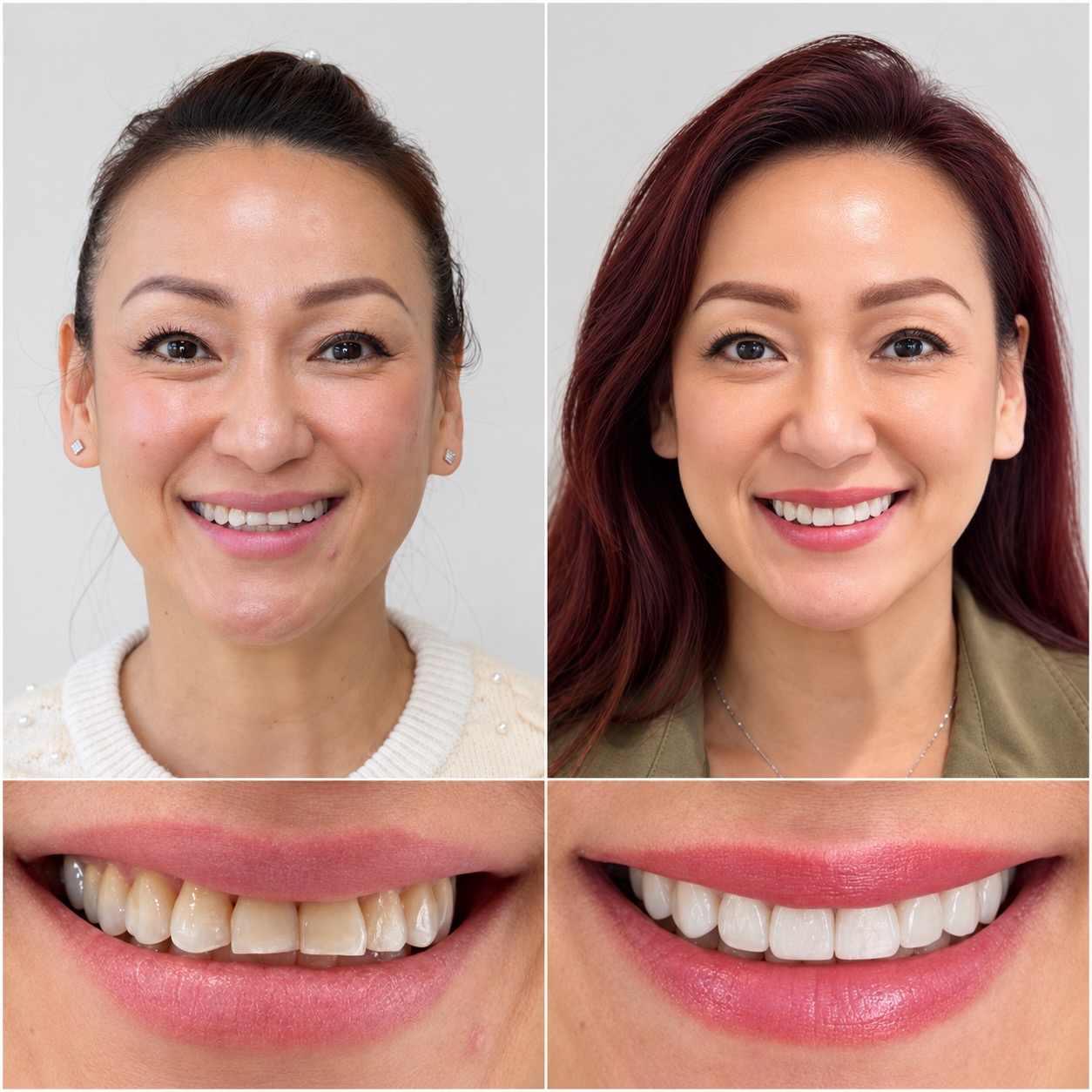
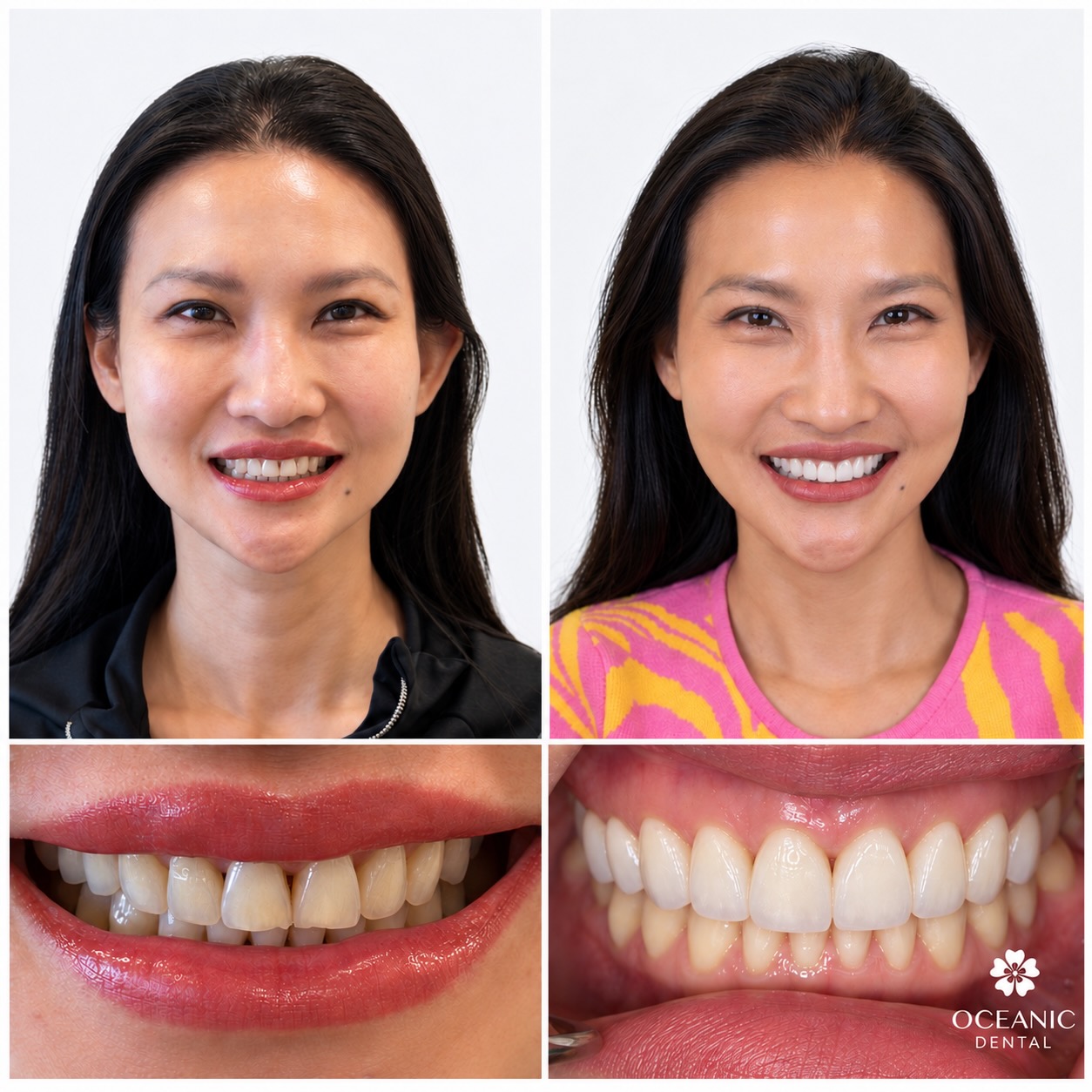
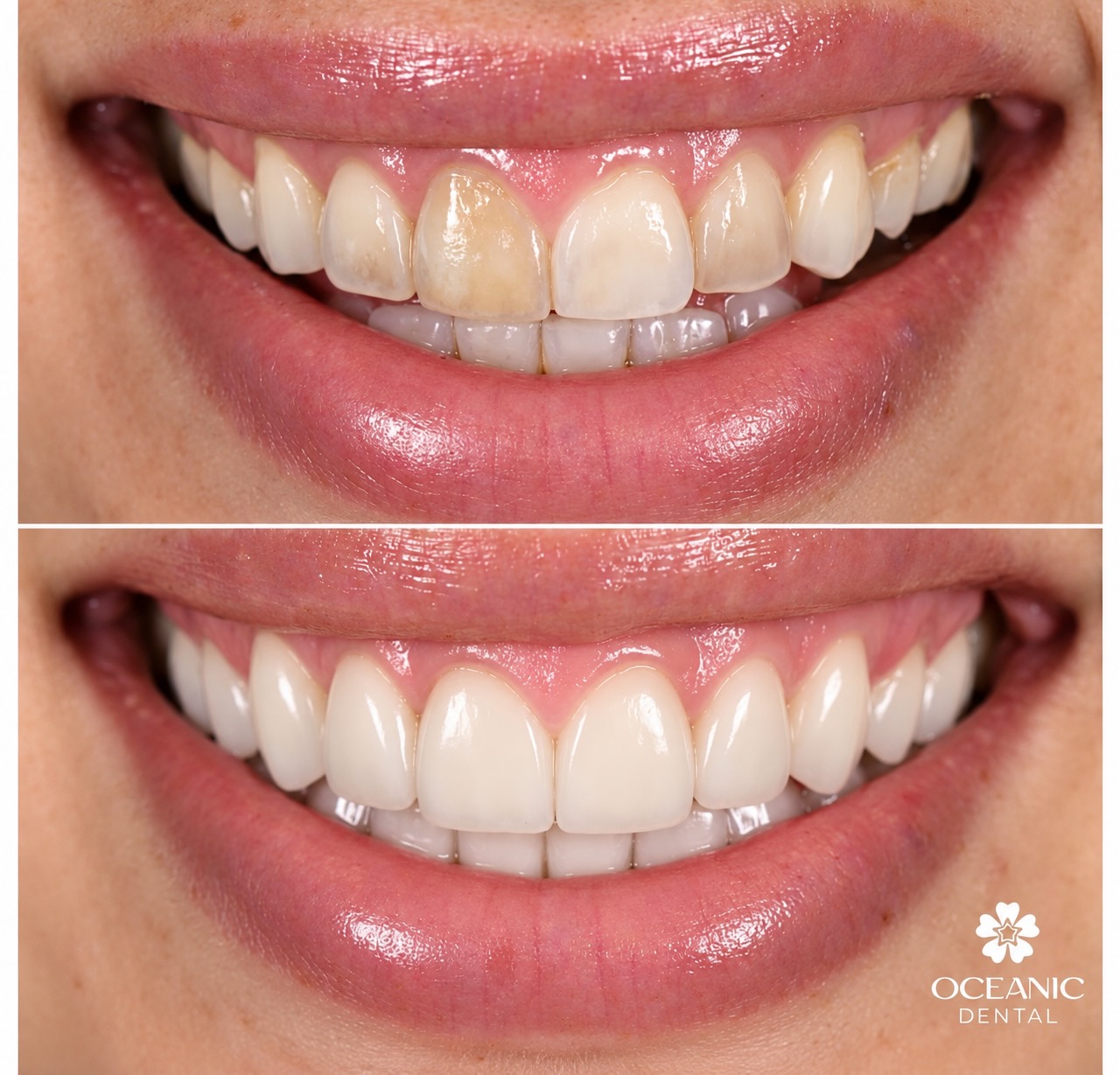
Seeing is believing! Check out our before and after gallery to witness the amazing transformations our patients have experienced with ultra-thin no-prep/no-shave veneers.
Building Trust Through Compassionate Care and Expertise
Dr. Pham believes that every smile tells a story, and she’s here to make sure yours is a reflection of a thriving, healthy life. Her focus on patient education, comfort, and long-term health means that every treatment is designed with your best interests at heart. Whether you’re here for routine care or a full smile makeover, you can trust that you’re in experienced, caring hands.
Roger P.
Teacher, Fountain Valley's Patient
Carly J.
Fountain Valley's Patient
Questions About No-Prep Veneers
No-prep veneers are an advanced, highly conservative form of cosmetic dentistry. The answers below explain how they differ from traditional veneers, when they work well, and what patients should understand before choosing treatment.
No-prep veneers are thin ceramic restorations bonded to the front surface of natural teeth without intentionally removing healthy enamel to create space for the veneer.
Unlike conventional veneers, which commonly involve some degree of tooth preparation, a true no-prep approach is additive: the dentist works with the existing tooth position and adds carefully designed ceramic to improve shape, proportion, symmetry, color or selected spaces.
The important distinction is not simply that the veneer is thin. It is that the desired result can be created without mechanically reducing healthy tooth structure.
In a true no-prep case, healthy enamel is not mechanically reduced to make room for the porcelain.
That is what distinguishes no-prep veneers from minimally prepared and conventionally prepared veneers.
Occasionally, a dentist may recommend very minor contouring, smoothing or modification for a specific clinical reason. If tooth structure needs to be intentionally removed, Dr. Pham explains that before treatment rather than calling the procedure strictly “no-prep.”
At Oceanic Dental, no-prep means no intentional enamel reduction to create space for the veneer.
Enamel is the highly mineralized outer layer of a natural tooth and is an excellent surface for adhesive bonding.
Clinical evidence has consistently shown favorable outcomes when ceramic veneers are bonded primarily to enamel, while greater exposure of the underlying dentin can make bonding more technique-sensitive and has been associated with lower success in some studies. (PubMed)
Preserving enamel therefore has two advantages: it conserves healthy natural tooth structure and maintains a favorable surface for bonding the ceramic restoration.
This is one of the main reasons Dr. Pham considers an additive, no-prep approach whenever the patient’s existing tooth position and desired result make it appropriate.
Often, no.
Because a true no-prep procedure does not involve drilling away enamel to create space for the veneer, local anesthetic injections are often unnecessary.
There can be exceptions. Gum treatment, other dental procedures performed at the same visit, individual sensitivity or a modification to the treatment plan may make anesthesia appropriate.
Dr. Pham reviews this with you beforehand so you know what to expect.
Usually not for a true no-prep case.
Traditional veneer treatment may require temporary restorations to cover teeth after they have been prepared while the final porcelain is being made.
With no-prep veneers, the natural teeth remain intact during the laboratory phase. Patients can generally continue using their own teeth until the final ceramics are ready for try-in and bonding.
No-prep veneers should not be described as simply “reversible.”
Preserving the underlying enamel is a significant advantage, but porcelain veneers are adhesively bonded restorations intended to function as long-term dental treatment. Removing a bonded veneer later is itself a dental procedure, and returning a tooth to exactly its pretreatment condition cannot be guaranteed.
A better description is tooth-preserving or minimally invasive, rather than reversible.
Dr. Pham discusses the long-term commitment before treatment so patients can make an informed decision.
Well-designed no-prep veneers should not simply add unnecessary thickness to a tooth. Avoiding an overcontoured or bulky appearance is one of the reasons case selection and design are so important.
Because no enamel is removed to create space, Dr. Pham must determine whether porcelain can be added within the available space while maintaining natural tooth proportions, contours, gum relationships and bite. She evaluates the existing position and inclination of the teeth, facial and smile proportions, available restorative space and the amount and location of the desired change. If achieving the desired result would require adding excessive volume, a no-prep approach may not be the best treatment. In that situation, Dr. Pham will discuss more appropriate alternatives.
Yes, but the amount of color change possible depends on the starting tooth color and the thickness and optical properties of the ceramic.
Ultra-thin ceramics interact with the color of the natural tooth beneath them. This translucency can produce an exceptionally natural appearance, but it also means that significant underlying discoloration may require a different material, additional ceramic thickness, whitening before treatment or another restorative approach. For this reason, Dr. Pham plans color, translucency and thickness together rather than simply selecting a shade from a chart.
The better question is whether a veneer is properly designed, supported, bonded and appropriate for that particular tooth and bite.
Ceramic veneers as a category have demonstrated high long-term survival in clinical studies. A systematic review involving 6,500 porcelain laminate veneers estimated cumulative survival at approximately 95.5% at 10 years. More recent evidence also reports high long-term survival for several commonly used ceramic systems.
No-prep veneers also have a potential adhesive advantage: when healthy enamel is preserved, the restoration can be bonded predominantly to enamel, which is a favorable bonding substrate. Long-term performance still depends on case selection, ceramic design, bonding technique, bite forces, habits such as grinding, oral health and maintenance.
The only reliable way to determine candidacy is through a clinical evaluation and smile-design consultation.
Dr. Krystal Pham evaluates your teeth, enamel, existing dental work, gum health, bite, tooth position, facial and smile proportions, and what you would actually like to change. She can then explain whether your goal is best accomplished with true no-prep veneers, a minimally prepared approach, orthodontics, bonding, whitening, conventional veneers or a combination of treatments.
The objective is not to make every patient a no-prep veneer patient. It is to achieve the smile you want while preserving as much healthy natural tooth structure as reasonably possible.
.png)
.png)
Love Your Smile.
Keep What Makes It Yours.
Schedule NowIf you’ve thought about veneers but hesitated because you don’t want healthy teeth drilled down, we’d love to show you what’s possible. Meet with Dr. Pham, talk about the smile you imagine and learn how no-prep approach could work for you.