No-prep veneers, now 10% off for our patients
Wondering if veneers could work for your smile? Snap a photo of your teeth, upload it here, and Dr. Pham will let you know if you look like a good candidate for no-prep veneers. No appointment needed to find out.


You already trust us with your teeth. Let's talk about your smile.
Because you're already an Oceanic Dental patient, we know your enamel, your bite and your dental history. That makes it easier to tell you honestly whether no-prep veneers are a good fit, often from just a photo.
Keep your healthy enamel
No-prep veneers are added to the front of your teeth instead of replacing enamel that's drilled away.
Find out before you commit
Send a photo from your phone. We'll tell you if no-prep veneers are worth a closer look, with no obligation.
A patient-only offer
We're setting aside 10% off no-prep veneers for the first 20 existing patients who move forward.

What are no-prep veneers?
No-prep veneers are ultra-thin porcelain shells bonded to the front of your natural teeth, with no intentional removal of healthy enamel.
Enamel is reduced to make room
A layer of healthy enamel is usually removed first, and that can't be undone. Shots and temporary veneers are common.
Porcelain is added to what you have
Ultra-thin ceramic bonds directly to your enamel. There's typically no drilling, no anesthetic and no temporaries.
Color
A brighter smile that still looks like you.
Shape
A fuller look for small, narrow or worn teeth.
Symmetry
More even edges and proportions.
Gaps
Close small spaces without braces.
Who is a good candidate?
No-prep veneers work best when your smile has room for a thin layer of added porcelain. You may be a good fit if any of these sound familiar:
Small or narrow teeth
Veneers can add a fuller, more balanced shape.
Worn, chipped or uneven edges
Restore length and symmetry without drilling.
Small gaps or a set-back smile
Porcelain can close spaces and bring your smile forward.
Stains whitening won't fix
Get a lasting, natural-looking shade.
This isn't a diagnosis. If no-prep veneers aren't the right fit, Dr. Pham will tell you which conservative option might suit you better.
Three steps, right from your phone
No appointment, no special lighting and no obligation to book treatment.
Take two photos
One full smile and one close-up of your front teeth. Face a window for natural light, and skip the filters.
Upload them below
Add a quick note about what you'd like to change: color, shape, chips, gaps or anything else.
Hear back from Dr. Pham
We'll reach out to let you know if you look like a candidate and to reserve your 10% patient savings.
See if you're a candidate
Upload two quick photos and we'll let you know if no-prep veneers are worth exploring.
Photo tips
Stand facing a window for natural light
Smile big so we can see your teeth
No filters or editing
JPG, PNG or HEIC up to 10 MB each
Limited to the first 20 existing Oceanic Dental patients who start treatment.
No-prep smiles we've designed
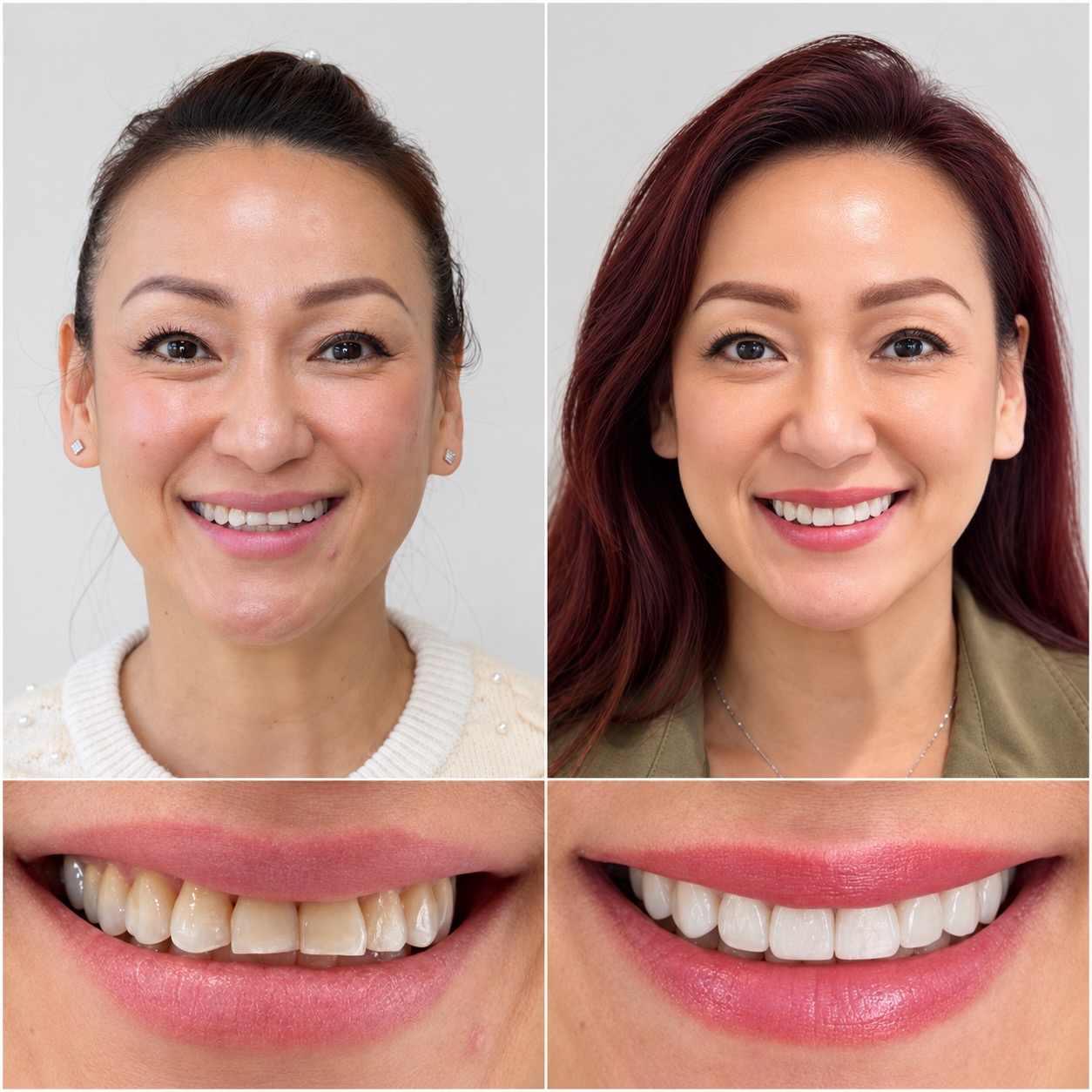
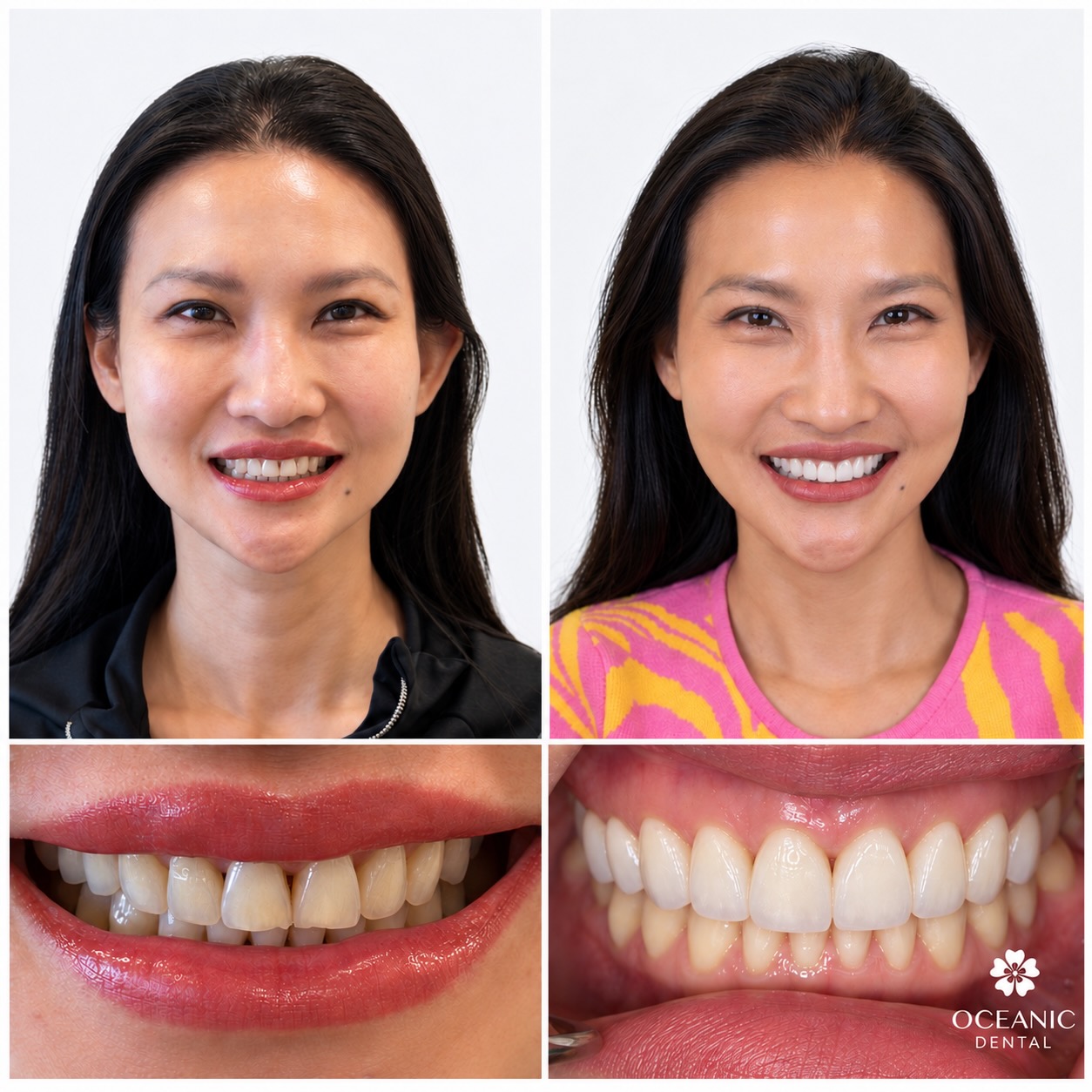
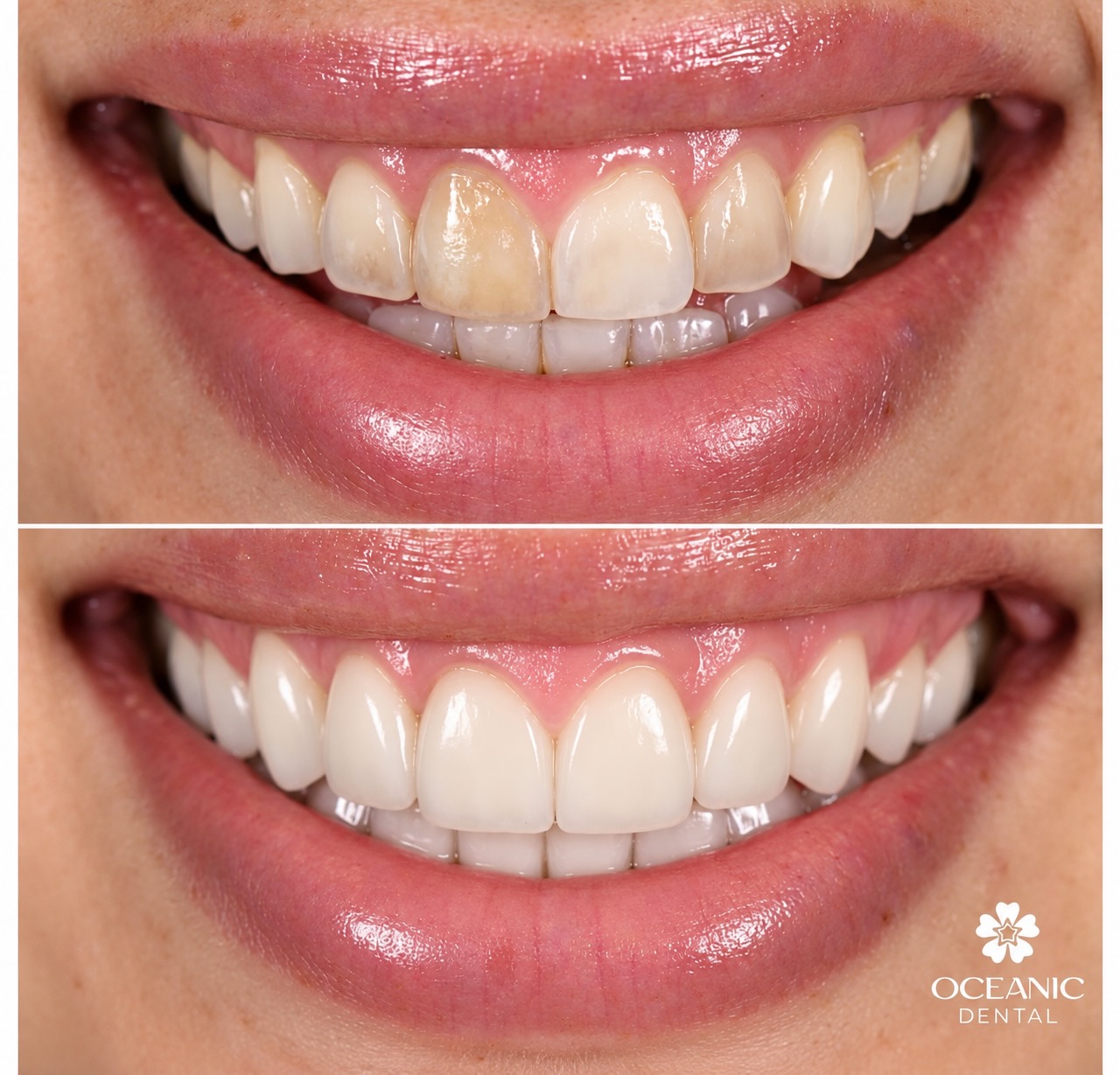
Results vary and depend on your teeth, enamel, bite and treatment plan.

Meet Dr. Krystal Pham
Dr. Pham designs natural-looking smiles with a special focus on no-prep, no-shave veneers. She looks at your tooth position, facial proportions, available space and bite before recommending anything.
Doing less to the tooth takes more from the design. With no-prep veneers, fractions of a millimeter matter, and that careful planning is what keeps results looking natural rather than bulky.
Questions About No-Prep Veneers
No-prep veneers are an advanced, highly conservative form of cosmetic dentistry. The answers below explain how they differ from traditional veneers, when they work well, and what patients should understand before choosing treatment.
A photo is usually enough for a first look.
Your photos show tooth shape, size, color and spacing, which tells Dr. Pham whether no-prep veneers are worth exploring. Because you're already an Oceanic Dental patient, she can also review your records. Candidacy and your final plan are always confirmed at an in-person visit.
It's reserved for the first 20 existing patients who start no-prep veneer treatment.
Send your photos to hold your spot. If you're a candidate, our team will confirm your eligibility and apply 10% off your no-prep veneer treatment.
No-prep veneers are thin ceramic restorations bonded to the front surface of natural teeth without intentionally removing healthy enamel to create space for the veneer.
Unlike conventional veneers, which commonly involve some degree of tooth preparation, a true no-prep approach is additive: the dentist works with the existing tooth position and adds carefully designed ceramic to improve shape, proportion, symmetry, color or selected spaces.
The important distinction is not simply that the veneer is thin. It is that the desired result can be created without mechanically reducing healthy tooth structure.
In a true no-prep case, healthy enamel is not mechanically reduced to make room for the porcelain.
That is what distinguishes no-prep veneers from minimally prepared and conventionally prepared veneers.
Occasionally, a dentist may recommend very minor contouring, smoothing or modification for a specific clinical reason. If tooth structure needs to be intentionally removed, Dr. Pham explains that before treatment rather than calling the procedure strictly “no-prep.”
At Oceanic Dental, no-prep means no intentional enamel reduction to create space for the veneer.
Enamel is the highly mineralized outer layer of a natural tooth and is an excellent surface for adhesive bonding.
Clinical evidence has consistently shown favorable outcomes when ceramic veneers are bonded primarily to enamel, while greater exposure of the underlying dentin can make bonding more technique-sensitive and has been associated with lower success in some studies. (PubMed)
Preserving enamel therefore has two advantages: it conserves healthy natural tooth structure and maintains a favorable surface for bonding the ceramic restoration.
This is one of the main reasons Dr. Pham considers an additive, no-prep approach whenever the patient’s existing tooth position and desired result make it appropriate.
Often, no.
Because a true no-prep procedure does not involve drilling away enamel to create space for the veneer, local anesthetic injections are often unnecessary.
There can be exceptions. Gum treatment, other dental procedures performed at the same visit, individual sensitivity or a modification to the treatment plan may make anesthesia appropriate.
Dr. Pham reviews this with you beforehand so you know what to expect.
Usually not for a true no-prep case.
Traditional veneer treatment may require temporary restorations to cover teeth after they have been prepared while the final porcelain is being made.
With no-prep veneers, the natural teeth remain intact during the laboratory phase. Patients can generally continue using their own teeth until the final ceramics are ready for try-in and bonding.
No-prep veneers should not be described as simply “reversible.”
Preserving the underlying enamel is a significant advantage, but porcelain veneers are adhesively bonded restorations intended to function as long-term dental treatment. Removing a bonded veneer later is itself a dental procedure, and returning a tooth to exactly its pretreatment condition cannot be guaranteed.
A better description is tooth-preserving or minimally invasive, rather than reversible.
Dr. Pham discusses the long-term commitment before treatment so patients can make an informed decision.
Well-designed no-prep veneers should not simply add unnecessary thickness to a tooth. Avoiding an overcontoured or bulky appearance is one of the reasons case selection and design are so important.
Because no enamel is removed to create space, Dr. Pham must determine whether porcelain can be added within the available space while maintaining natural tooth proportions, contours, gum relationships and bite. She evaluates the existing position and inclination of the teeth, facial and smile proportions, available restorative space and the amount and location of the desired change. If achieving the desired result would require adding excessive volume, a no-prep approach may not be the best treatment. In that situation, Dr. Pham will discuss more appropriate alternatives.
Yes, but the amount of color change possible depends on the starting tooth color and the thickness and optical properties of the ceramic.
Ultra-thin ceramics interact with the color of the natural tooth beneath them. This translucency can produce an exceptionally natural appearance, but it also means that significant underlying discoloration may require a different material, additional ceramic thickness, whitening before treatment or another restorative approach. For this reason, Dr. Pham plans color, translucency and thickness together rather than simply selecting a shade from a chart.
The better question is whether a veneer is properly designed, supported, bonded and appropriate for that particular tooth and bite.
Ceramic veneers as a category have demonstrated high long-term survival in clinical studies. A systematic review involving 6,500 porcelain laminate veneers estimated cumulative survival at approximately 95.5% at 10 years. More recent evidence also reports high long-term survival for several commonly used ceramic systems.
No-prep veneers also have a potential adhesive advantage: when healthy enamel is preserved, the restoration can be bonded predominantly to enamel, which is a favorable bonding substrate. Long-term performance still depends on case selection, ceramic design, bonding technique, bite forces, habits such as grinding, oral health and maintenance.
The only reliable way to determine candidacy is through a clinical evaluation and smile-design consultation.
Dr. Krystal Pham evaluates your teeth, enamel, existing dental work, gum health, bite, tooth position, facial and smile proportions, and what you would actually like to change. She can then explain whether your goal is best accomplished with true no-prep veneers, a minimally prepared approach, orthodontics, bonding, whitening, conventional veneers or a combination of treatments.
The objective is not to make every patient a no-prep veneer patient. It is to achieve the smile you want while preserving as much healthy natural tooth structure as reasonably possible.
.png)
.png)
See what's possible before anything is permanent
Send your photos today and we'll let you know if no-prep veneers are right for your smile, with 10% off if you move forward. Only 20 spots are available.
Offer valid for existing Oceanic Dental patients only. 10% off no-prep veneer treatment, limited to the first 20 patients who begin treatment. Candidacy is confirmed at an in-person exam. Cannot be combined with other offers. Not valid toward insurance copays or deductibles.